
The room you record and mix in shapes your sound more than any microphone, interface or plugin, and it’s the part of a home studio that most people leave until last. Acoustic treatment also happens to be the corner of YouTube with the highest ratio of confident nonsense to useful advice: foam tiles sold as bass traps, egg boxes, and “soundproofing” that does nothing of the sort. To help you sort the physics from the marketing, we’ve picked 33 channels that explain how sound actually behaves in small rooms and what to do about it, grouped by topic: the fundamentals, measuring your room, DIY builds, manufacturer education, full studio construction, vocal booths, speaker placement, budget and rental-friendly options, hi-fi listening rooms, soundproofing, and the experts to graduate to.
Jump to the section you need.
- Acoustics fundamentals
- Room measurement & analysis
- DIY absorbers, bass traps & diffusers
- Manufacturer & retailer education
- Studio design & construction
- Vocal booths & isolation
- Speaker placement & monitoring
- Budget & apartment treatment
- Hi-fi & home-theatre listening rooms
- Soundproofing & noise control
- Expert & advanced
- The desk is part of the room
Acoustics Fundamentals
Before you buy or build anything, it pays to understand what absorption, diffusion and bass trapping actually do, and why a small room behaves so differently from a large one.
Acoustics Insider: Jesco Lohan’s channel is devoted entirely to home studio acoustics: room modes, absorption, bass traps, speaker placement and DIY treatment. Videos like “Acoustic Panel Placement: When To Use Absorption, And When Diffusion?” and “Diffusion In Home Studios: Do’s And Don’ts For Small Rooms” explain the principles clearly, and his advice is built on measuring well over a hundred real studios.
Acoustic Fields: Dennis Foley’s Acoustic Fields Academy has a back catalogue of more than 800 videos on room acoustics, bass trapping, diffuser design and treatment. Titles like “Why Bass Traps Don’t Actually Trap Bass” and “Ideal Acoustic Diffuser Placement Guide” dig into what low-frequency energy does in small rooms, which is the core problem most home studios face.
Acoustic Geometry: A treatment manufacturer best known for its animated explainers “How Sound Works (In Rooms)” and “An Acoustic Primer – 10 Minutes Toward Better Sound”, which are so clear that other acoustics companies re-host them. If you want reflections, absorption and diffusion to click in ten minutes, start here.
Room Measurement & Analysis
Guessing is expensive. A measurement microphone and free software will tell you exactly what your room is doing, and these channels show you how to read the results.
Music City Acoustics: A Nashville treatment maker and consultancy with the tagline “Acoustics Simplified”. Its multi-part Room EQ Wizard series takes you from first measurement to analysing the results, and the “Treating A Studio Start-To-Finish” series shows those measurements being turned into a treatment plan on a real room.
Obsessive Compulsive Audiophile: OCA’s channel is about digital room correction using REW and rePhase: measurement, filter design, subwoofer alignment and calibration for stereo and surround systems. The REW walkthroughs are among the most detailed available, and they’ll teach you to read a measured frequency response properly rather than just admire it.
SoundID from Sonarworks: Sonarworks’ official channel covers SoundID Reference speaker and headphone calibration, including the measurement-mic workflow in “Measuring speakers with SoundID Reference”. It’s useful for understanding what software correction can and cannot fix compared with physical treatment, which is a distinction a lot of home studios get wrong.
DIY Absorbers, Bass Traps & Diffusers
Treatment is one of the few areas of studio building where DIY beats bought for most people. These channels show the builds step by step.
Sound Headquarters: A Toronto studio builder whose channel is almost entirely DIY build videos: huge corner bass traps, skyline diffusers, rolling floor-standing panels and wood-slat panels, each built and installed on camera. If you’d rather make your panels and gobos than buy them, this is the closest thing to a workshop course.
NepTune AudioSpace: NepTune shares professional DIY designs for panels, bass traps and diffusers for studios and home theatres. “DIY Corner Bass Traps – Quickest, Easiest Method” and the 3D skyline diffuser build are good examples of the channel’s clear, no-fuss construction videos.
Tech Ingredients: A general science and engineering channel that happens to contain two of the most referenced acoustic build videos on YouTube: “Anechoic Chamber – DIY Sound Absorption Panels” and “DIY Speakers and Acoustic Panels”. They test absorber materials and construction experimentally rather than by rule of thumb, so you’ll know why a panel works before you build a dozen of them.
Manufacturer & Retailer Education
The better treatment companies have realised that educated customers buy the right products. Their channels are worth watching even if you never order from them.
GIK Acoustics: GIK mixes product videos with content on the science of room acoustics, including a full Room EQ Wizard tutorial, “How to Treat a Room with Acoustic Panels – First Reflection Points” and a guide to treating a two-channel listening room. It’s one of the most useful vendor channels for a home studio owner.
Primacoustic: Alongside installation videos for its panels, corner traps and ceiling clouds, Primacoustic’s channel hosts explainers like “How Do Acoustic Panels Work?”, “Controlling Sound With Absorption – How Much Do You Need” and “Airborne vs Structural Sound”, which is the distinction between treatment and soundproofing that trips most people up.
Vicoustic: The Portuguese maker of VicBooth and Multifuser products publishes before-and-after demos of treated rooms, explainers like “Sound Insulation Explained” and “What do Acoustic Panels ACTUALLY do?”, and factory tours showing how diffusers and panels are made. Good for hearing what treatment does rather than being told.
Studio Design & Construction
If you’re converting a garage, a shed or a basement, or building a room within a room, these channels cover the design and construction side properly.
WSDG: The official channel of Walters-Storyk Design Group, the acoustics and AV design firm co-founded by John Storyk, designer of Electric Lady Studios. Its webinars and talks, including “The Evolution Of The Project/Home Studio” and “Studio Design Secrets”, give home builders a view of how professional rooms are designed from first principles.
Soundproof Your Studio: Wilson Harwood’s Nashville firm designs sound-isolated rooms for studios, home theatres and practice spaces, and the channel teaches the construction side: Green Glue, decoupled walls, ventilation and full builds. “How To Build A Recording Studio In A Garage” walks through a real room-within-a-room project step by step.
Jarkko Lunnas: A Finnish metal drummer who documented building his own soundproof drum studio on a budget, starting with “How I Built My Soundproof Studio (On Budget) – Room Within a Room”. It’s a useful reality check on what a decoupled home room costs, involves and weighs.
Vocal Booths & Isolation
Whether you’re buying a booth, building one or treating a closet, these channels show what isolation actually takes.
WhisperRoom: WhisperRoom’s channel demonstrates its modular isolation booths for recording, voice-over and music, with explainers like “What is a WhisperRoom?” and “Standard vs Enhanced: How to Choose the Right Booth”. It’s a clear illustration of how prefab booths achieve isolation and what a double wall buys you over a single one.
Studiobricks: Studiobricks makes portable isolation booths, and its channel covers assembly, walkthroughs and trade-show demos, including a full acoustic walkthrough of the Studiobricks One and a real-time seven-minute assembly. Seeing how a two-way isolating booth is built and treated inside will inform any DIY vocal-corner project.
Booth Junkie: Mike DelGaudio’s voice-over channel has a substantial acoustics thread: treating a closet for vocals, treating a WhisperRoom, “Fixing the world’s worst vocal booth” and a long conversation with Acoustics Insider. It’s the most practical channel for anyone recording voice in a corner of a normal room.
Speaker Placement & Monitoring
Where your monitors and listening position sit relative to the walls is free to change and makes an enormous difference. The monitor manufacturers explain it best.
Genelec: Genelec’s official channel carries instructional content on monitoring, DSP and calibration, including a webinar on loudspeaker placement and room acoustics as part of its GLM series. It explains boundary effects, placement and room compensation from the perspective of the people who design the speakers.
ADAM Audio: ADAM’s channel releases regular content on monitoring and studio setup, including “PROPER Studio Monitor Placement 101” and “How to Setup Your Studio Monitors”, plus a series made with Music City Acoustics that takes a bedroom from empty to treated, with episodes on diffusion and installing ceiling clouds.
Neumann: Neumann’s official channel covers its KH-series monitors and the MA 1 automatic monitor alignment system alongside its microphones. The “Monitor Monday” series and Homestudio Academy content address setting up monitors and subwoofers at home, and the MA 1 material is a clear introduction to measurement-based room alignment.
Budget & Apartment Treatment
Renting, sharing, or simply not ready to drill holes? These channels focus on the treatment that gives the most improvement for the least money and disruption.
Audio University: Kyle Mathias makes short, clear audio tutorials, and his acoustics videos are aimed squarely at budget setups: “How To Treat Your Room On A Budget | Start With 3 Panels” and “Acoustic Treatment for Beginners”. Ideal for anyone who needs to prioritise a handful of panels rather than treat a whole room.
VocalBoothToGo: VocalBoothToGo makes portable booths and acoustic sound blankets, and its channel covers setup, tests and reviews of those products. Blanket-based treatment that hangs from stands or rails is one of the few effective no-drilling options for renters and small apartment rooms, and the channel shows how to get the most from it.
Warp Academy: A music-production education channel with a dedicated acoustics series backed by a free studio design course, including “Acoustic Treatment: The Strategy for Small Studios” and “Stop Wasting Money On Acoustic Treatment Before Watching This”. The small-studio and any-budget episodes are the ones to watch first.
Hi-Fi & Home-Theatre Listening Rooms
The audiophile and home-cinema world has spent decades thinking about small-room acoustics, and most of it transfers directly to a mixing room.
Audioholics: Gene DellaSala’s channel reviews receivers, speakers and subwoofers with a stated aim of correcting industry misconceptions. Its “Room Acoustics 101” and placement-guideline videos with acoustician Anthony Grimani, plus the bass-management series, apply directly to a small mixing room.
Erin’s Audio Corner: Erin Hardison measures speakers and subwoofers objectively on a Klippel system for home theatre and hi-fi. Learning to read his directivity and frequency-response plots is directly useful for choosing studio monitors and understanding how they interact with the walls around them.
Audio Advice: A US hi-fi and home-theatre retailer and installer with four decades of design and installation experience. Its “A Guide To Home Theater Acoustics” and its showcases of treated dedicated rooms show how listening spaces are laid out and treated when someone has planned the whole room from the start.
Soundproofing & Noise Control
Treatment changes how a room sounds inside. Soundproofing stops sound getting in or out, and it’s a completely different job. These channels cover the real methods.
Trademark Soundproofing: Instructional videos on Green Glue, resilient sound clips and how to soundproof walls, floors and ceilings, from a company that sells the materials and has installed a lot of them. It’s a straightforward reference for the isolation methods that no amount of foam can replace.
Second Skin Audio: Second Skin manufactures noise-reduction materials and its channel offers practical soundproofing, acoustics and noise-control tutorials covering walls, doors, bedrooms and music rooms. Useful whether you’re trying to keep drums in or the neighbours out.
Acoustical Surfaces: Acoustical Surfaces has been solving soundproofing, noise-control and vibration problems for over 25 years. Its channel includes “What Is Soundproofing?”, “The Soundproof Door” and “How Sound Works in Rooms” alongside panel installation videos, covering both the isolation and treatment sides of a build.
Expert & Advanced
Once the basics are in place, these channels will sharpen your understanding and protect you from expensive myths.
Ethan Winer: Co-founder of RealTraps and author of The Audio Expert, Ethan covers audio, recording, home theatre and acoustics with a scientist’s impatience for marketing claims. His “Audio Myths Workshop” and his bass-trap and room-treatment material are a rigorous next step once you understand the fundamentals.
Audio Science Review: The video companion to the ASR site, offering technical reviews, discussions and measurements of audio products. Videos like “Understanding Speaker Measurements” teach the measurement literacy and healthy scepticism that carry over to evaluating monitors, treatment products and room-correction claims.
Haverstick Designs: An Indianapolis acoustical consulting firm that uses testing and modelling to design studios, home theatres and performance spaces. Videos such as “EXTREME Sound Isolation in Home Studio” and “Building a Recording Studio from Scratch” show how a working acoustician approaches real projects from brief to finished room.
The Desk Is Part of the Room
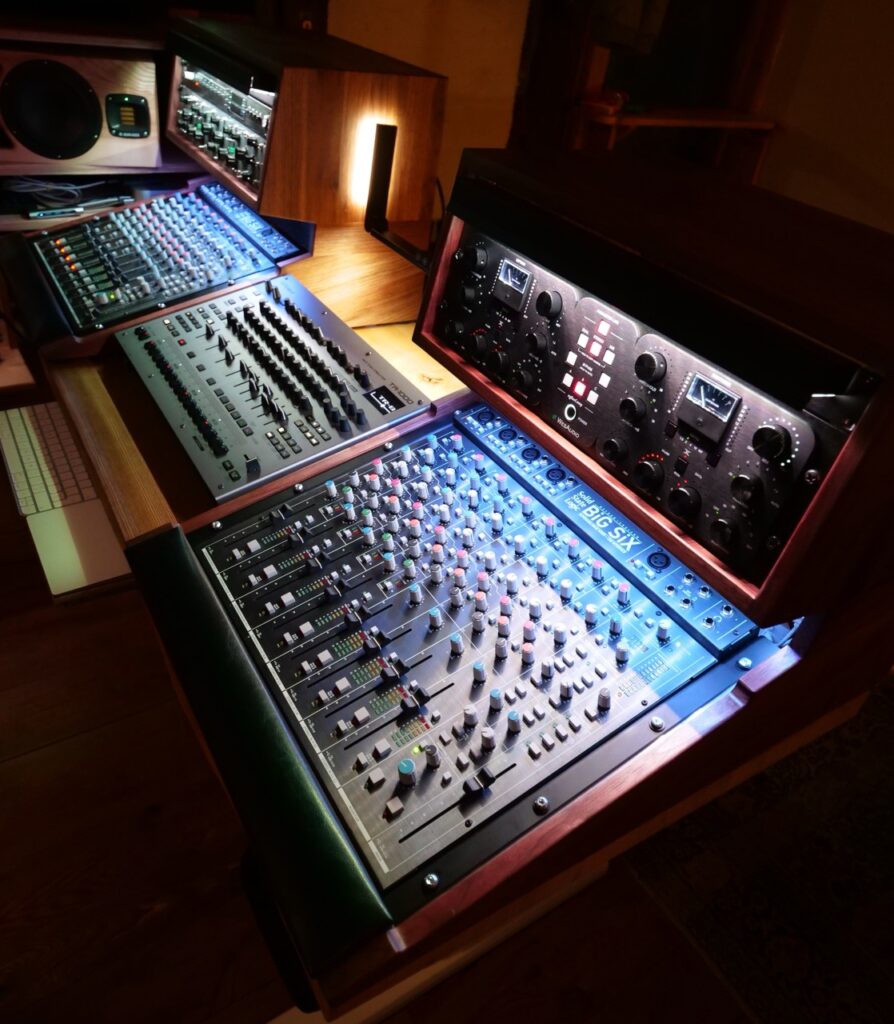
Ask any of the acousticians above about the biggest reflection problem in a typical home studio and they’ll point at the desk. A large flat surface between you and the monitors bounces sound straight back to your ears, and a desk cluttered with gear lying flat makes it worse. Mixingtable’s solid hardwood desk stands lift your controllers and interfaces off the desktop and angle them towards you, and our 19″ racks take the rest of the gear off the desk entirely, so your monitors have a cleaner path to your ears and your room has one less surface to fight.
Browse desk stands See 19″ racks
The Complete Channel Directory
All 33 channels, grouped by category, for quick reference.
Acoustics Fundamentals
Room Measurement & Analysis
DIY Absorbers, Bass Traps & Diffusers
Manufacturer & Retailer Education
Studio Design & Construction
Vocal Booths & Isolation
Speaker Placement & Monitoring
Budget & Apartment Treatment
Hi-Fi & Home-Theatre Listening Rooms
Soundproofing & Noise Control
Expert & Advanced
Room sorted? See our companion guides to the best home recording YouTube channels and the best home studio setup YouTube channels.